

Buddah
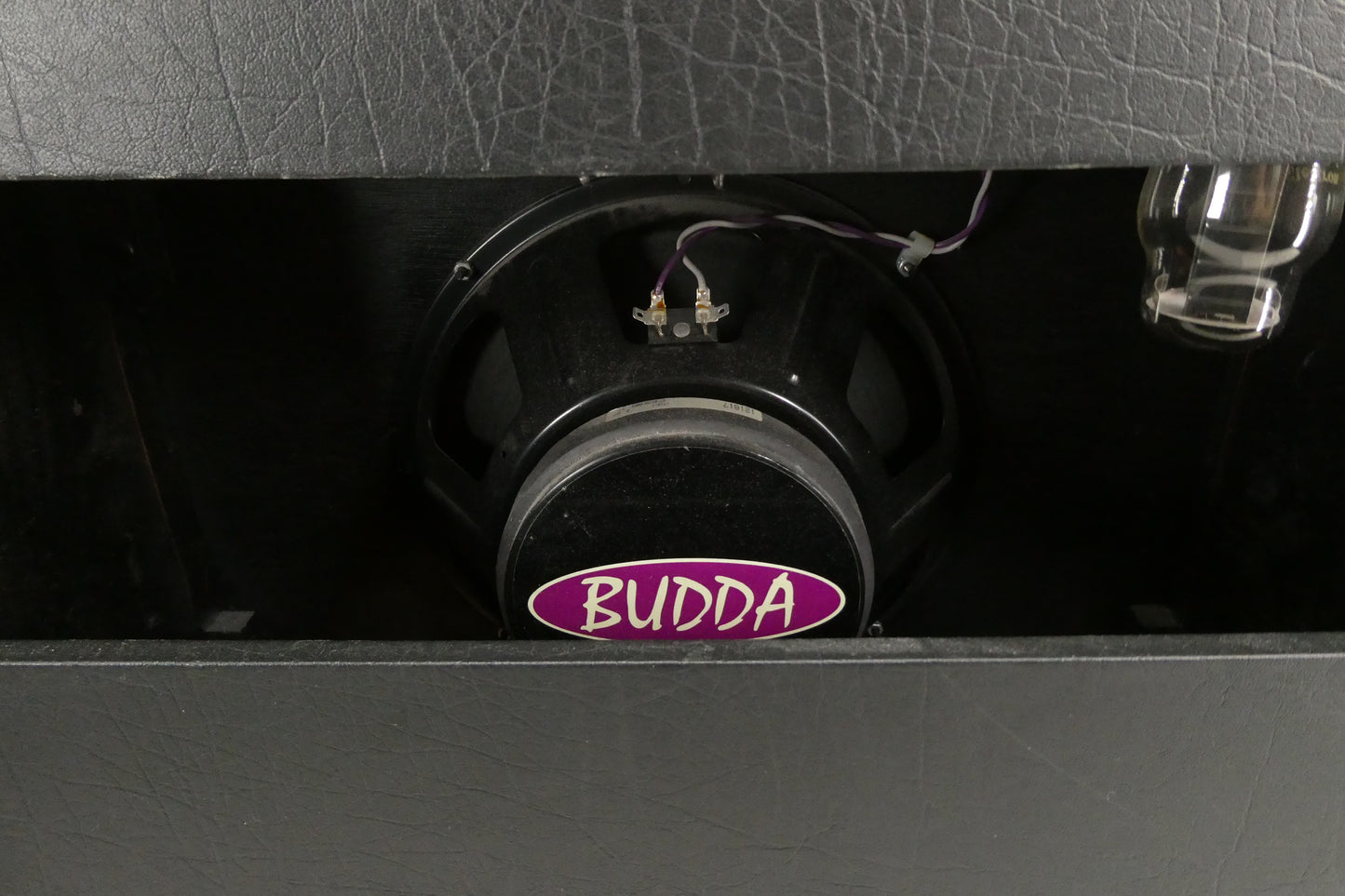
Buddah SUPERDRIVE 18 w/Foot Switch Cable Used
Buddah SUPERDRIVE 18 w/Foot Switch Cable Used
Regular price
$1,050.00 USD
Regular price
$0.00 USD
Sale price
$1,050.00 USD
Unit price
per
Couldn't load pickup availability
Buddah SUPERDRIVE 18 w/Foot Switch Cable Used
The Budda Superdrive 18 is a powerful guitar amplifier with the following specifications:
- Output Power : 18 watts
- Speaker Configuration : 1x12
- Channel Design : Dual-channel (rhythm and high-gain)
- Tubes Used : EL84 and 5U4 rectifier tubes
-
Features
: Expressive controls for high-gain and clean tones, suitable for both practice and small gigs.
5
Superdrive 18 Series II Manual Thank you for purchasing the finest tube amplifier in the business. We appreciate your support and look forward to providing you with years of trouble free service. Before we get into the features of your amplifier, we would like to note that tube amplifiers require a little bit of care and maintenance that we would like to share with you. When you first turn on your amplifier remember to leave it on rest for at least 30 seconds before turning it to go. This will give the tubes plenty of time to warm up and will extend tube life. The chassis is built out of aluminum which is a conductor of heat. It may feel warm to the touch, but no need to worry. Check to make sure that the impedance switch is set to the correct ohmage for your cabinet. Improper loading may cause excess tube and transformer wear and eventual failure. Use high quality speaker and guitar cables to ensure maximum performance. - The manual for this amplifier is available by a simple google search !
- The master controls the overall volume of your amplifier. The higher the setting, the louder the output and tube saturation. Start off setting the control at around 9 o'clock am and then dial in your rhythm control in the clean channel until it begins to distort. This will be a good reference for your rhythm channel. Pull the master control and then dial in your gain control for the amount of distortion. Bass: Use this control to dial in your bass frequency's. Depending upon your pickup configuration, single coils will require more bass and humbuckers less. Mid - Use this control to dial in your mid range frequency's. Mids are the most active part of the eq circuit, cutting scoops your tone, sort of like creating a "V" in a graphic equalizer. Boosting them will add presence. Pull Modern: This radically changes the eq of your amplifier. Pulling this control will slightly reduce the mids while raising the bass and treble frequencies. Works best in the drive mode with mid control at minimum settings. Treble: Use this control to dial in your treble frequency's. Depending upon your pickup configuration, single coils will require less treble and humbuckers more. Drive: This controls the overall distortion of your amplifier. We reccommend setting the drive control at 9 am and slowly dial it in until you are satisfied with your overdrive. Lower settings will offer more of a blues type of gain, mid settings are good for crunch and higher settings for metal. Use your master to add girth to the drive control, (notice how the amp sustains a note longer when the master is turned up). Rhythm: Use the rhythm control to adjust the gain of your clean channel. The higher the setting, the more distortion you will add to your signal. We recommend starting at around 1 o'clock. As you rotate the knob clockwise listen to your signal until it begins to distort. Dial in the amount of gain according to the syle of music you play. Pull Brite: This control adds presence to your clean channel. Use this to create shimmery clean tones and to give your treble a boost when using guitars with humbuckers and darker sounding woods. Input: This is where you plug in your instrument. Footswitch: Plug your single button footswith cable here to access both the rhythm and drive channel of your amp. If you forget your switch at the gig, you can pull the master control to access the lead channel. Effects Loop: Superdrive amps have series loops. This is where you plug in your effects devices. Send : Use this jack to send your signal to an effect unit input, or to another amplifiers effects return. This path of the signal comes from the preamp and includes the eq section and master volume of your amplifier. Return: Use this jack to receive the output of your effects device or amplifiers send our direct out. This path of the signal includes the power amp and is post eq and master volume. Slave: The slave out is a 100 ohm compensated signal that is parallel to the speaker out which includes both the preamp and power amp output of your amp. Use this output to send your signal to a power amplifier connected to multiple speaker cabinets for a louder version of your amp. Slave Level: This controls the level of the output from your slave out. If slaving to an effects unit in a stereo amp rig, use the units input sesitivity LED lights as a guage to set the slave level. Use this control to avoid overloading the input of your slave amp or effects unit. Speakers: This is where you plug in your speaker cabinets. Impedance: Select the proper ohmage of your speaker load. Our combos and cabinets are wired at 8 ohms unless otherwise stated. Trouble Shooting Tips Preamp and power tubes may become microphonic and lose power over time.